Method for calculating a staircase
Learn how to calculate a comfortable and secure staircase with this concrete example.
In our example, we will have the following initial dimensions:

Height = 3000 mm

Floor opening length = 3500 mm

Opening thickness = 250 mm
Blondel's law
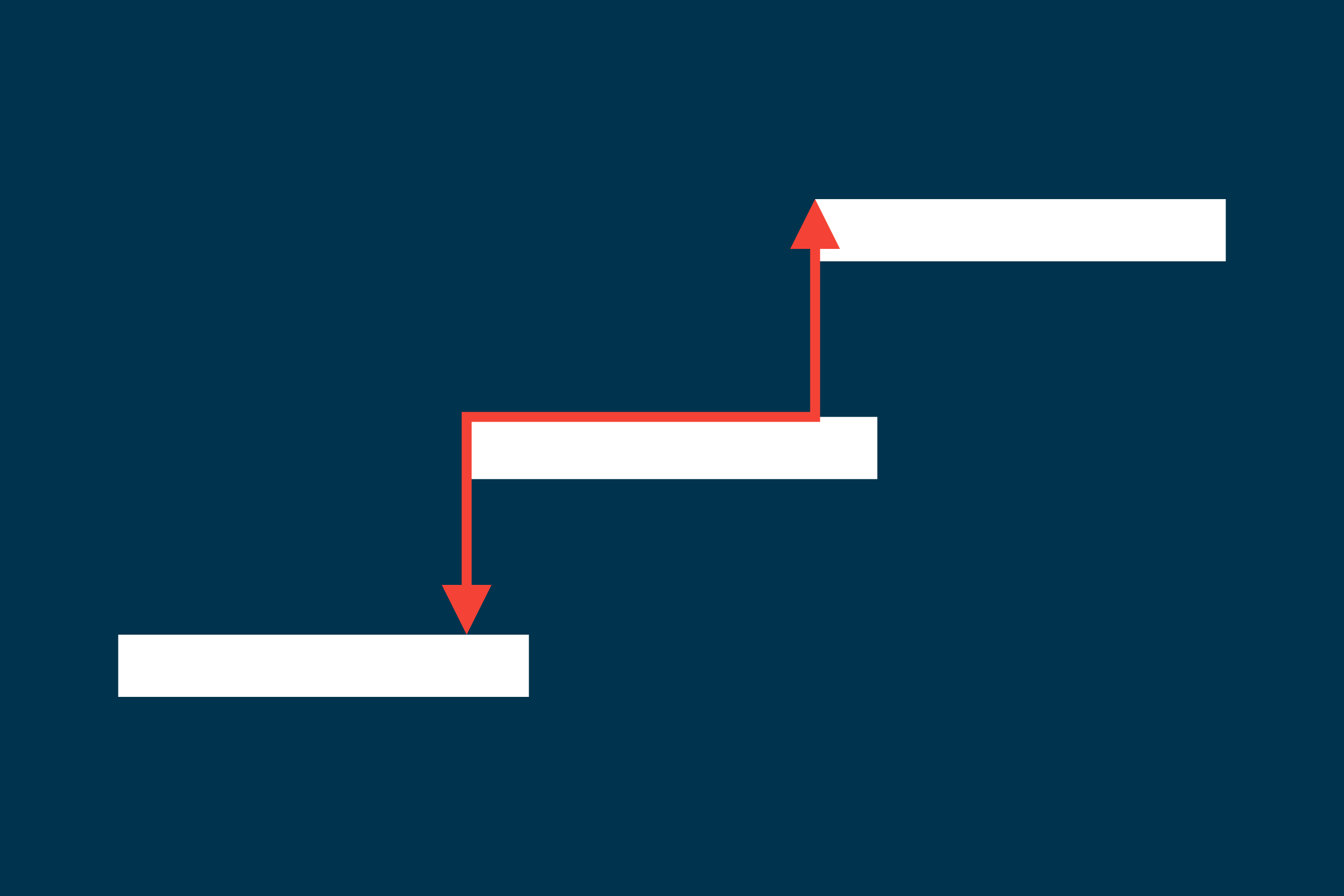
Calculating a staircase involves finding the best compromise between the going and the step height.
To calculate these 2 values, just use Blondel's law:
Blondel's Law = Going + 2 x Step height = 630 mm
In reality, Blondel's law can be equal between 590 to 650 mm.
Number of steps

We divide the height of the staircase by an ideal step height (175 mm):
Number of steps = Round(Height / Step height) - 1
Number of steps = Round(3000 / 175) - 1
Number of steps = Round(17.14) - 1
Number of steps= 17 - 1
Number of steps= 16
Step height
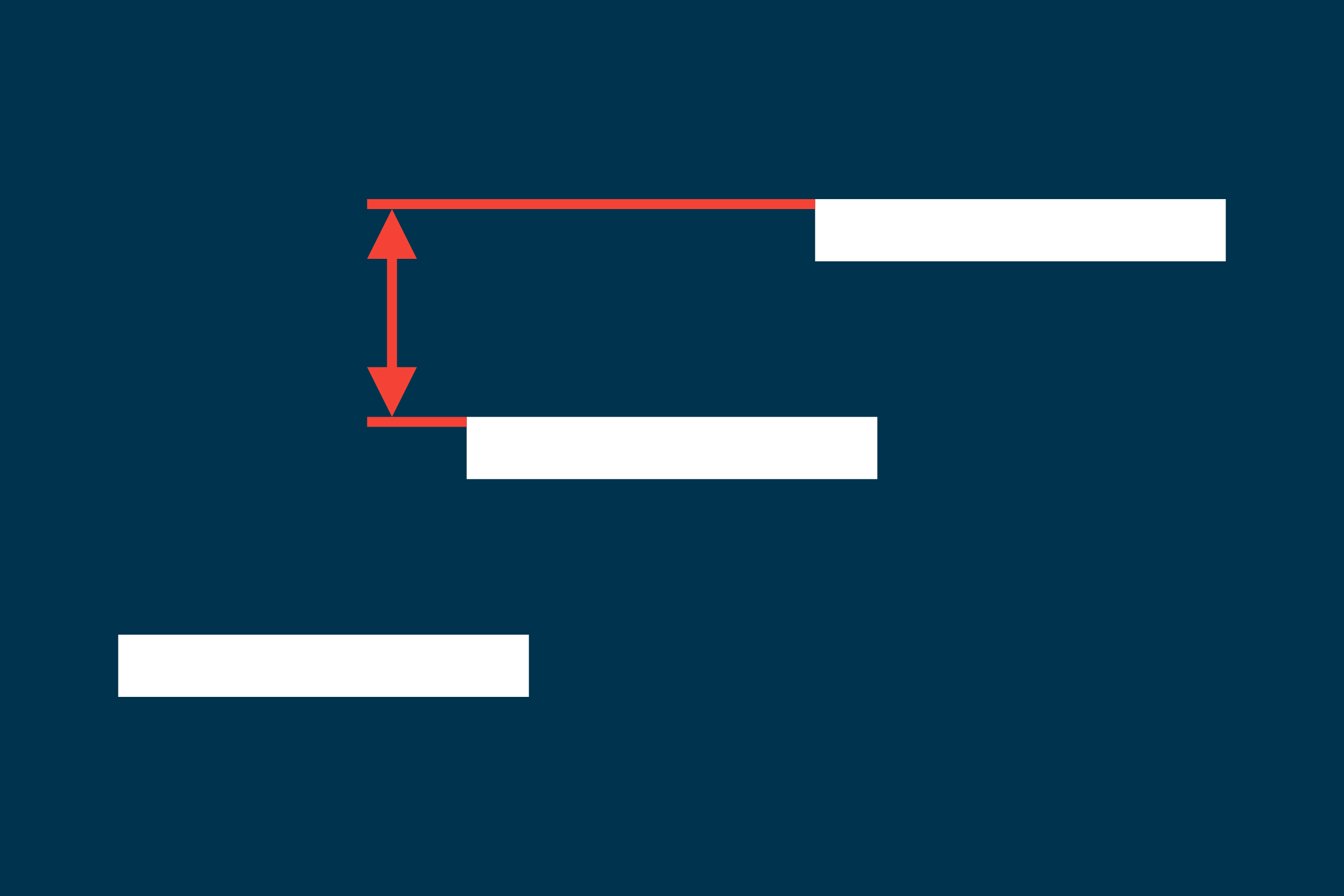
We divide the height of the staircase by the number of steps:
Step height = Height / (Number of steps + 1)
Step height = 3000 / (16 + 1)
Step height = 3000 / 17
Step height = 176.47 mm
The step height should be between 150 and 200mm.
Its ideal value is 175mm.
Going
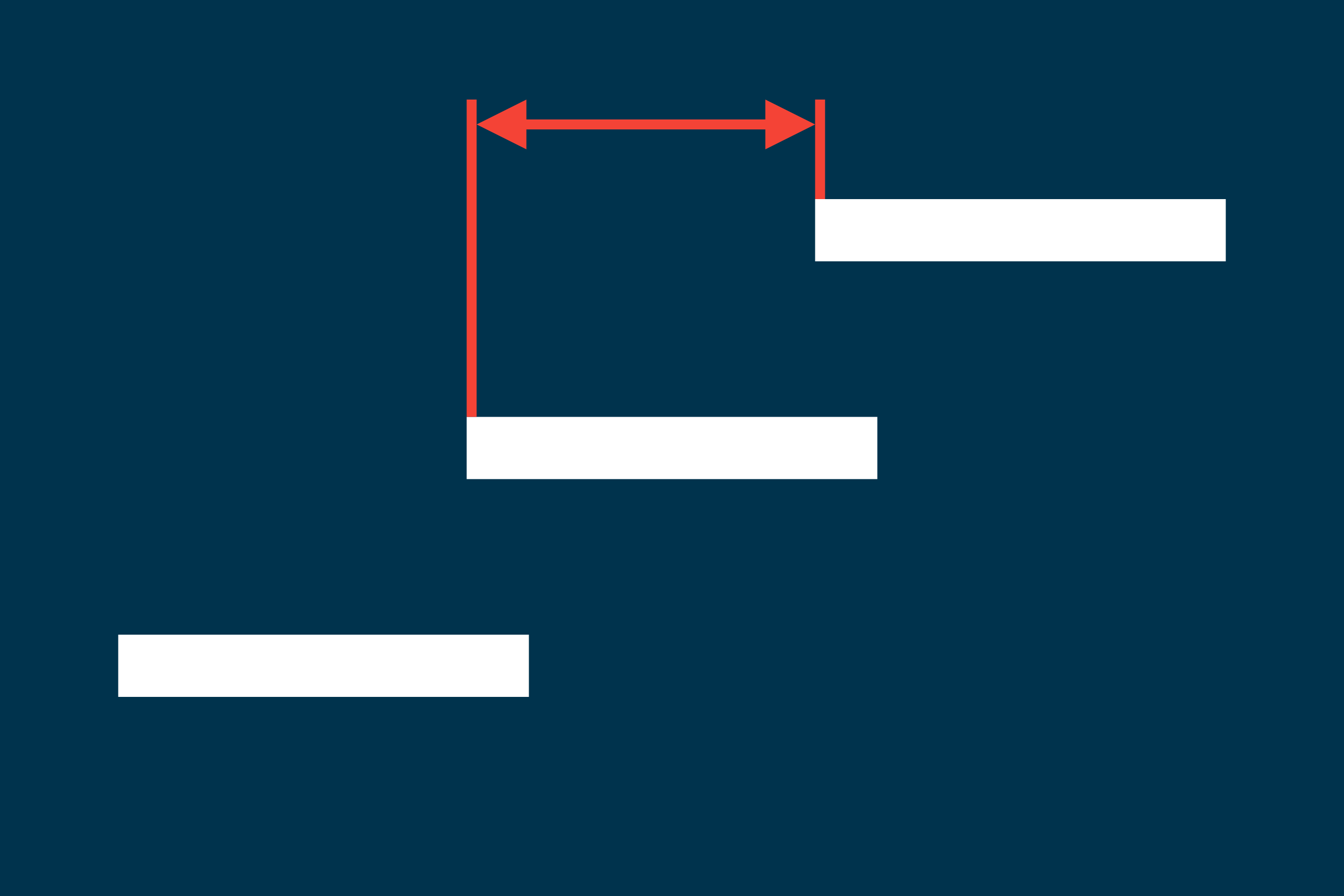
Thanks to Blondel's law, we can calculate the going:
Going = 630 - 2 x Step height
Going = 630 - 2 x 176.47
Going = 277.06 mm
The going should be between 230 and 330mm.
Its ideal value is 280mm.
Overlap

The overlap improves the comfort of the staircase when ascending and rounds the step depth.
A value of 40 or 50mm is ideal.
It is first necessary to calculate the step depth:
Step depth = Round(Going + Overlap)
Step depth = Round(277.06 + 45)
Step depth = Round(322.06)
Step depth = 320 mm
We can now calculate the overlap:
Overlap = Step depth - Going
Overlap = 320 - 277.06
Overlap = 42.94 mm
Landing step

The landing step is an optional step in the extension of the upper floor. It offers several advantages:
- It allows for overlap on the last step.
- It facilitates the connection of the stringer and handrail with the upper floor.
- It allows hiding the fixing plate at the top of the staircase.
In our example, we choose a landing step slightly greater than the overlap:
Landing step = Ceil(Overlap)
Landing step = Ceil(42.94)
Landing step = 50 mm
Angle
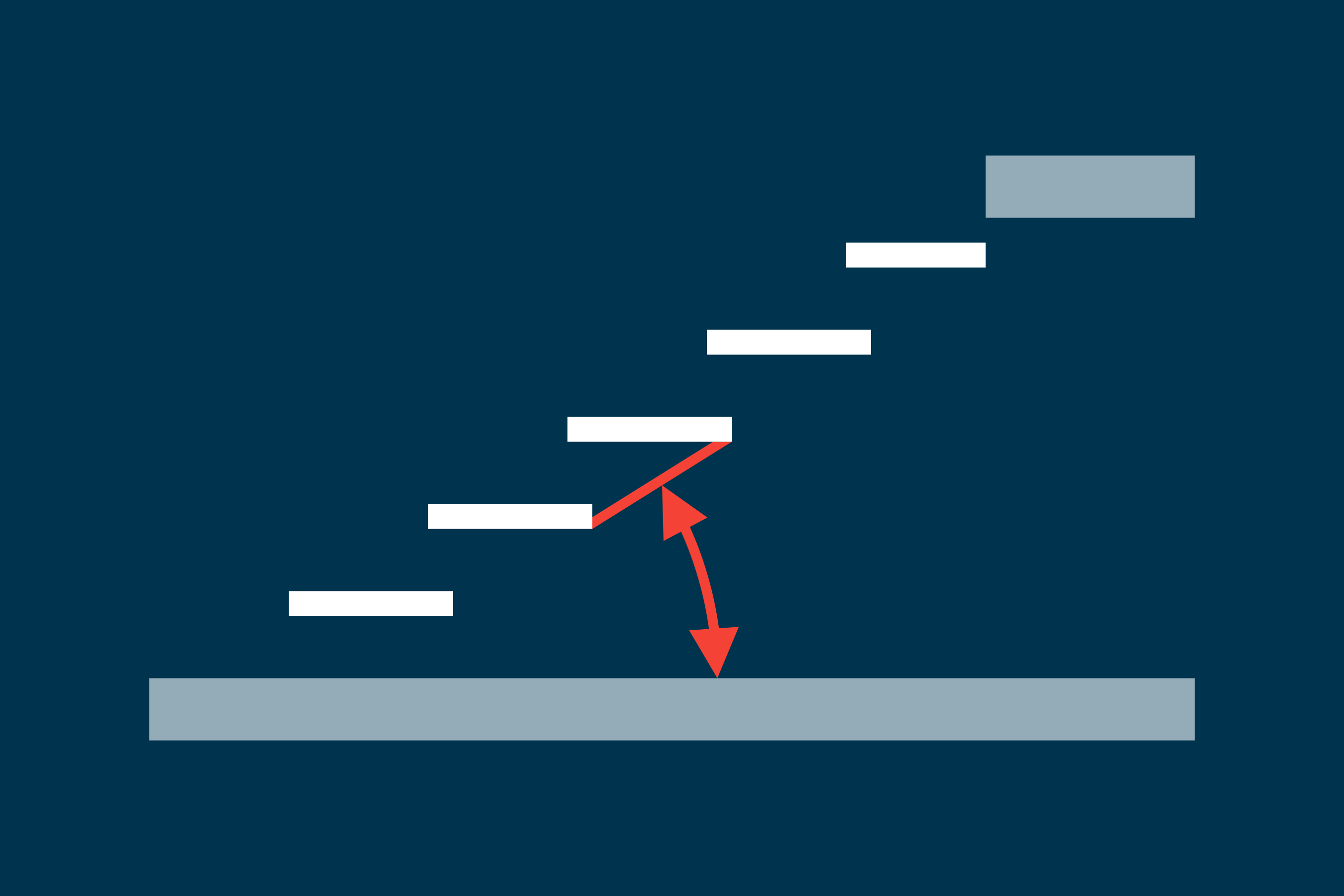
We use trigonometry with Arc tangent to calculate the angle:
Angle = Arctan(Step height / going)
Angle = Arctan(176.47 / 277.06)
Angle = 32.49°
As long as Blondel's law is respected, the staircase will be comfortable to climb.
However, the angle is important for the comfort of the staircase, especially for descending.
The angle of a staircase should be between 20° and 50°, and the ideal value is between 30° and 35°:
| Angle | Staircase type | Desired angle |
|---|---|---|
| 0° → 20° | Rail | 7° → 15° |
| 20° → 50° | Staircase | 30° → 35° |
| 50° → 75° | Mill ladder | 50° → 60° |
| 75° → 90° | Ladder | 75° → 85° |
Total run

We multiply the number of steps by the going, adding the landing step if it exists:
Total run = Number of steps x Going + Landing step
Total run = 16 x 277.06 + 50
Total run = 4482.06 mm
Headroom

We use trigonometry to calculate the headroom:
Headroom = tan(Angle) x (Floor opening length - Landing step) - Opening thickness
Headroom = tan(32.49) x (3500 - 50) - 250
Headroom = tan(32.49) x 3450 - 250
Headroom = 1947.45 mm
The headroom must be greater than 1900mm.
Its ideal value is greater than or equal to 2100mm.
Adjustments
It is possible to adjust the dimensions by modifying the number of steps and/or the value used for Blondel's law.
By decreasing the number of steps and/or Blondel's law, the total run will decrease and the headroom will increase.
By increasing the number of steps and/or Blondel's law, the total run will increase and the headroom will decrease.
It is then necessary to recalculate all the other values:
| Number of steps | 15 | 16 | 16 | 16 | 17 |
| Blondel's law | 630 mm | 620 mm | 630 mm | 640 mm | 630 mm |
| Step height | 187.5 mm | 176.47 mm | 176,47 mm | 176.47 mm | 166.67 mm |
| Going | 255 mm | 267.06 mm | 277.06 mm | 287.06 | 296.67 mm |
| Step depth | 300 mm | 310 mm | 320 mm | 330 mm | 340 mm |
| Overlap | 45 mm | 42.94 mm | 42.94 mm | 42.94 mm | 43.33 mm |
| Landing step | 50 mm | 50 mm | 50 mm | 50 mm | 50 mm |
| Angle | 36.33° | 33.46° | 32.49° | 31.58° | 29.33° |
| Total run | 3875 mm | 4322.96 mm | 4482.06 mm | 4642.96 mm | 5043.39 mm |
| Headroom | 2286.75 mm | 2029.74 mm | 1947.45 mm | 1870.9 mm | 1688.16 mm |

Vincent Le Nagard
Easystair creator


